

Anxiety Therapy for Women in St. Louis, MO
Feel calmer. Think clearer. Come home to yourself.
You look like you’re holding it together but internally, anxiety feels relentless.
Your mind won’t slow down. You replay conversations, overthink decisions, and feel emotionally exhausted from carrying so much on your own.
Therapy can help you understand what’s underneath the overwhelm so you can finally feel calmer, more grounded, and more like yourself again.
When Strength Becomes Strain
For many women, anxiety isn’t always obvious.
Anxiety Can Show Up in Many Ways
Many women I work with are leaders, professionals, mothers, entrepreneurs, or caregivers. They are thoughtful and driven. They care deeply. They also learned early to be responsible, self-sufficient, and high-achieving. Over time, those strengths can turn into chronic pressure:
Perfectionism that never lets you rest
Guilt when you set boundaries
Anxiety when you slow down
A quiet belief that your needs come last
These patterns once helped you succeed or stay safe. Now, they may be costing you your peace.

A Different Way Forward
Therapy with me is not about fixing you.
It’s about reconnecting.
We gently explore the parts of you that learned to overfunction, perform, or carry more than your share. We slow down enough to notice what your body has been holding. We work with attachment patterns that shape how you show up at work and in relationships.
My approach is trauma-informed and grounded in clinical depth, while steady and relational. You won’t be pushed. You won’t be pathologized. You’ll be met with curiosity and respect.
Over time, clients often experience:
More calm in their nervous system
Clearer boundaries without overwhelming guilt
Less internal pressure to prove or perform
Greater self-trust in decisions
A deeper sense of steadiness and emotional resilience
Not a dramatic reinvention — but a quiet, meaningful shift.
Anxiety Therapy for Women in St. Louis, MO
Anxiety Often Has Deeper Roots
For many women, anxiety is not simply “stress.”
It can develop from:
Chronic pressure and responsibility
Relationship wounds
Burnout and emotional exhaustion
Childhood experiences
Perfectionism and overfunctioning
A nervous system that has been working overtime for years
Therapy helps you understand not just what you’re feeling but why your nervous system has been working so hard to protect you.

EMDR Therapy for Anxiety in St. Louis
I specialize in EMDR therapy and trauma-informed therapy for women struggling with anxiety, emotional overwhelm, burnout, and relationship stress.
EMDR helps your brain and nervous system process unresolved experiences so they no longer feel as emotionally overwhelming or activating.
This work can help reduce:
Overthinking and worry
Emotional reactivity
Chronic stress and burnout
Relationship challenges
Feeling stuck in survival mode
Many women describe feeling calmer, clearer, more emotionally grounded, and more connected to themselves as therapy progresses.
Therapy with me
My approach is trauma-informed, relational, and grounded in both emotional depth and practical support.
I work with women who are thoughtful, capable, and often used to carrying more than they should on their own.
Together, we slow things down enough to understand:
the patterns underneath the anxiety
what your nervous system has been holding
how past experiences may still be affecting the present
This work moves at a pace that feels steady, collaborative, and manageable.
You won’t be judged, rushed, or expected to have everything figured out before starting therapy.

Frequently Asked Questions
-
Many women benefit from trauma-informed therapy, EMDR therapy, attachment-focused therapy, and nervous system-based approaches that address both emotional and physical symptoms of anxiety.
-
Yes. EMDR therapy helps process unresolved experiences that may be contributing to anxiety, emotional overwhelm, chronic stress, and feeling emotionally stuck.
-
You do not need to fully understand the root of your anxiety before starting therapy. Many women begin therapy because they simply know they feel overwhelmed, emotionally exhausted, disconnected, or stuck.
-
Yes. I offer both virtual and in-person anxiety therapy for women in St. Louis and throughout Missouri.

You Don’t Have to
Have It All Figured Out
If you’re unsure whether this is the right fit, that’s completely okay
Reaching out is simply a way to start the conversation there’s no pressure to have everything figured out.
Anxiety Therapy for Women in St. Louis, MO
Frequently Asked Questions About Anxiety
-
Many women experiencing anxiety appear high-functioning on the outside while internally feeling emotionally overwhelmed, mentally exhausted, or constantly on edge.
Anxiety can develop from chronic stress, relationship patterns, perfectionism, emotional burnout, trauma, or a nervous system that has been under pressure for a long time.
Women seeking anxiety therapy in often describe feeling:
emotionally drained
stuck in overthinking
unable to fully relax
disconnected from themselves
overwhelmed even when nothing seems “wrong” externally
Therapy can help you understand the deeper patterns contributing to anxiety so you can feel calmer, more grounded, and less stuck in survival mode.
-
High-functioning anxiety often looks different from what many people expect.
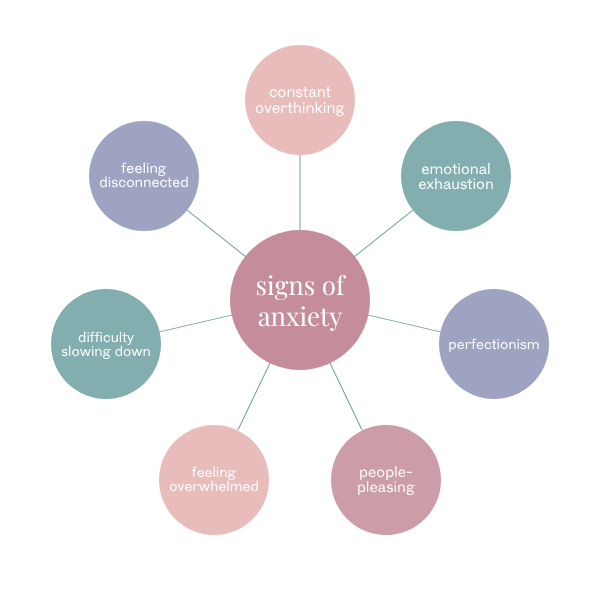
Women with high-functioning anxiety may appear successful, responsible, organized, and capable while privately struggling with:
constant overthinking
racing thoughts
perfectionism
people-pleasing
difficulty slowing down
emotional exhaustion
fear of disappointing others
Many women seeking anxiety therapy in St. Louis describe feeling pressure to hold everything together while internally feeling overwhelmed and emotionally depleted.
Therapy can help address the underlying patterns contributing to anxiety while helping you feel more emotionally balanced and connected to yourself.
-
Yes. Trauma and chronic stress can significantly affect the nervous system and contribute to anxiety, emotional overwhelm, burnout, and feeling stuck in survival mode.
Trauma is not always one major event. For many women, trauma may involve:
chronic emotional stress
relationship wounds
childhood experiences
feeling emotionally unsupported
years of overfunctioning or caregiving
These experiences can leave the nervous system constantly anticipating stress or danger, even long after the experiences have passed.
Trauma-informed therapy and EMDR therapy can help women process unresolved experiences and reduce the emotional intensity connected to anxiety and overwhelm.
-
Yes. EMDR therapy can help women who feel stuck in cycles of overthinking, anxiety, emotional reactivity, and chronic stress.
Many women seeking EMDR therapy in St. Louis describe:
replaying conversations repeatedly
difficulty turning their minds off
feeling emotionally overwhelmed
relationship anxiety
feeling mentally exhausted all the time
EMDR helps the brain and nervous system process unresolved experiences that may be contributing to these patterns.
As therapy progresses, many women feel calmer, less emotionally reactive, and more grounded in themselves and their relationships.
-
Emotional exhaustion can happen when your nervous system has been carrying stress, pressure, anxiety, or emotional responsibility for too long without enough support or recovery.
Many women experiencing emotional exhaustion feel:
mentally drained
disconnected from themselves
emotionally overwhelmed
responsible for everyone else
unable to fully rest or relax
Therapy can help you better understand the patterns contributing to burnout and emotional overwhelm while helping you reconnect with your own needs, boundaries, and emotional well-being.
-
Anxiety therapy may be helpful if you feel:
overwhelmed most of the time
emotionally reactive or constantly stressed
stuck in overthinking or self-doubt
exhausted from trying to hold everything together
disconnected from yourself or your relationships
Many women begin therapy because they are tired of living in survival mode and want to feel calmer, more emotionally grounded, and more connected to themselves again.
You do not need to be in crisis to benefit from therapy.
-
Many women benefit from approaches such as:
EMDR therapy
acceptance and commitment therapy
NeuroAffective Relational Model
trauma-informed therapy
attachment-focused therapy
nervous system-based therapy
relational therapy
These approaches help address both the emotional and physical effects of anxiety, burnout, chronic stress, and emotional overwhelm.
Therapy can help women move beyond simply managing symptoms and begin creating deeper, lasting emotional change.
-
Yes. I offer both virtual and in-person anxiety therapy and EMDR therapy for women in St. Louis and throughout Missouri.
Many women appreciate having flexible therapy options that fit their schedules and emotional needs while still receiving supportive, trauma-informed care.
-
The information provided on this website is for educational and informational purposes only and is not intended to be a substitute for professional mental health advice, diagnosis, or treatment. Reading this content does not establish a therapist-client relationship.
Therapy is a highly individual process, and the experiences, symptoms, and outcomes discussed may not apply to every person. If you are experiencing a mental health crisis or need immediate support, please contact 911, go to your nearest emergency room, or contact a crisis support line.
The content on this website is designed to offer general guidance and support regarding topics such as anxiety, trauma, emotional overwhelm, relationships, perimenopause, menopause, and addiction-related stress, but it should not replace personalized care from a licensed mental health professional.
If you are located in St. Louis or Missouri and are interested in therapy services, reaching out for a consultation can help determine whether therapy may be a good fit for your specific needs.